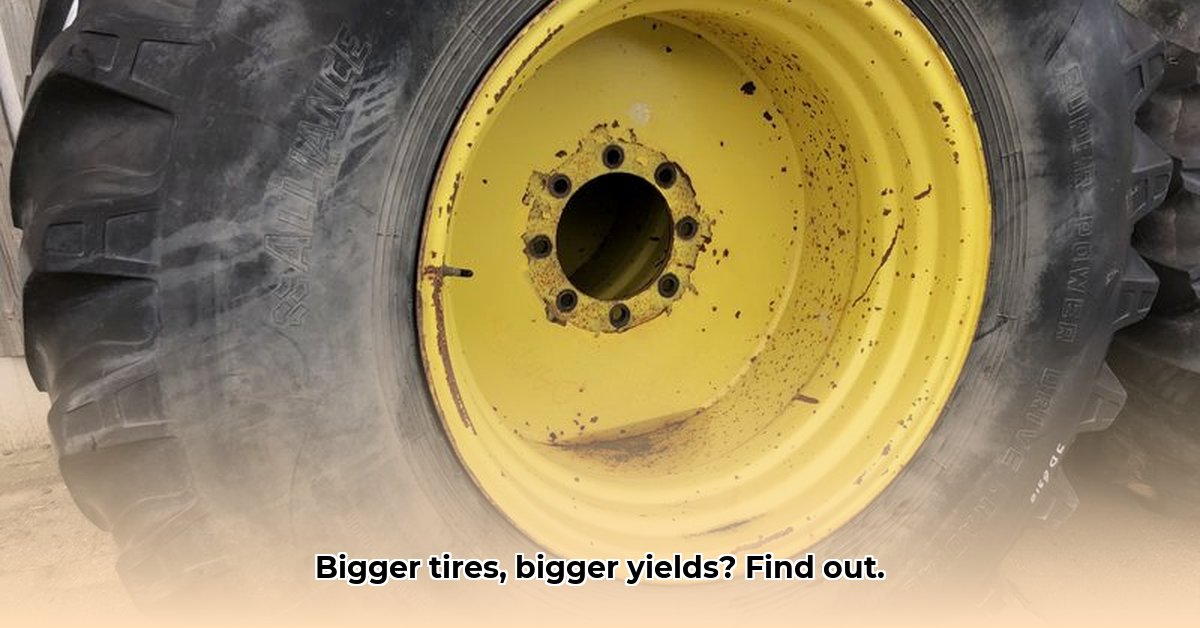
Choosing the right tractor tires is crucial for efficient and environmentally friendly farming. This article focuses on 32-inch tractor tires, exploring their role in sustainable agriculture and providing practical guidance for selection and maintenance. We'll examine how tire choices impact soil health, fuel efficiency, and overall farm profitability, highlighting both the benefits and limitations of various options. For more on tire inflation, see this helpful guide.
Soil Compaction: Minimizing the Impact
Soil compaction is a significant challenge for farmers, hindering water infiltration and root growth. Heavy machinery, including tractors, contributes significantly to compaction. 32-inch tractor tires, however, offer a potential solution. Their larger surface area distributes weight more evenly across the soil, reducing the pressure exerted at any given point. This is analogous to wearing snowshoes in deep snow, reducing impact compared to standard footwear.
While larger tires generally minimize compaction, proper inflation is paramount. Under-inflation negates the benefits, leading to increased soil damage. Therefore, regular pressure checks are essential for maximizing the positive impacts of 32-inch tires.
Fuel Efficiency: The Economic and Environmental Equation
Fuel costs are a substantial expense for farmers. Tires with low rolling resistance reduce fuel consumption, translating into direct cost savings and reduced greenhouse gas emissions. Studies indicate that 32-inch tires with optimized tread patterns can lower fuel consumption by 5-7%, a significant benefit over time. "These savings are substantial and contribute directly to both economic and environmental sustainability," notes Dr. Emily Carter, Agricultural Engineer at Cornell University.
Choosing the Right 32-Inch Tires: A Step-by-Step Guide
Selecting the appropriate 32-inch tractor tires involves considering several factors:
Soil Type: Sandy soils require different inflation pressures than heavier clay soils. Sandy soils are less prone to compaction. Clay soils are more sensitive and require lower pressure tires.
Farming Practices: Intensive tillage necessitates more robust tires, while minimal tillage benefits from lower-pressure options to minimize soil disturbance.
Tire Construction: Radial tires, while pricier initially, typically outperform bias-ply tires in fuel efficiency and soil protection due to their superior flexibility and shock absorption.
Inflation Pressure: Maintaining correct inflation pressure is crucial. Under-inflation increases compaction and fuel consumption; over-inflation damages tires and soil structure. Always adhere to the manufacturer's recommendations.
Long-Term Sustainability: Investing in the Future
The benefits of using sustainable tire practices extend well beyond immediate yields. Reduced compaction improves water retention, potentially reducing irrigation needs and energy consumption. Healthier soil also leads to higher yields, increasing overall farm efficiency and lowering the environmental impact per unit of production.
Innovations in Sustainable Tire Technology
Research constantly unveils new tire materials and designs focused on environmental sustainability. Bio-based polymers and recycled rubber are showing promise in creating more eco-friendly tires. While challenges remain in balancing performance, durability, and cost, these technologies hold significant potential for the future of sustainable agriculture.
Key Takeaways:
- Utilizing 32-inch tires offers significant potentials for sustainable farming practices.
- Radial tires generally provide superior performance in reducing compaction and improving fuel efficiency.
- Understanding different tread designs and their suitability for varied soil types is crucial for optimizing results.
- Implementing preventative maintenance, including regular pressure checks and rotations, maximizes tire life and reduces environmental impacts.
- A holistic approach, encompassing long-term ROI and environmental concerns, is essential during tire selection.
How to Choose Sustainable Tractor Tires for Optimal Soil Health
Selecting sustainable tractor tires demands a strategic approach:
- Assess your soil conditions: Understand your soil type (sandy, clay, loam, etc.) and its water retention capacity. This will guide your choice of tire tread pattern.
- Evaluate your farming practices: Consider the intensity of tillage and the types of equipment used. Intensive tillage necessitates tires designed to withstand higher stress levels.
- Analyze your budget: Although radial tires provide long-term cost savings through reduced fuel consumption and extended lifespan, they have a higher initial cost.
- Explore IF/VF technology: These tires allow for lower inflation pressures while maintaining load capacity, minimizing compaction. However, proper maintenance is critical to prevent increased wear.
- Implement a robust preventative maintenance program: Regular tire pressure checks, rotations, and visual inspections are crucial for maximizing tire lifespan and minimizing environmental footprint.
Comparing Tire Types: A Balanced Perspective
| Tire Type | Pros | Cons |
|---|---|---|
| Radial Tires | Reduced soil compaction, enhanced fuel efficiency, extended lifespan, improved traction | Higher initial cost |
| Bias-Ply Tires | Lower cost initially | Increased soil compaction, reduced fuel efficiency, shorter lifespan, inferior traction |
| IF/VF Tires | Significantly reduced soil compaction & increased traction at lower pressures | Potential for increased wear if not managed carefully; higher initial investment than bias ply tires. |
Remember, sustainable farming is a holistic endeavor. Choosing the right tires is one important element, but it must complement responsible soil management, optimized farming practices, and continuous improvement in agricultural technology.